Prediction markets currently frame "Will Russia capture Kupiansk-Vuzlovyi by May 31?" as a live geopolitical probability signal rather than a static headline.
Polymarket traders price YES at 2.9¢ versus NO at 96.8¢, implying a current consensus probability of 2.9%.
With low liquidity and approximately $259 in recent trading volume, the market reflects active positioning around political and macro uncertainty.
Last Updated: 2026-05-17T14:19:12.466Z
Current Market Pricing
YES Price
2.9¢
Bullish probability pricing
NO Price
96.8¢
Bearish probability pricing
Prediction markets currently imply a live probability of approximately 2.9%.
Market Structure
Probability
2.9%
Spread
0.003
Liquidity
Low
Volume (24h)
$259
Markets with tighter spreads and higher liquidity generally indicate stronger trader participation and more efficient price discovery.
Resolution Criteria
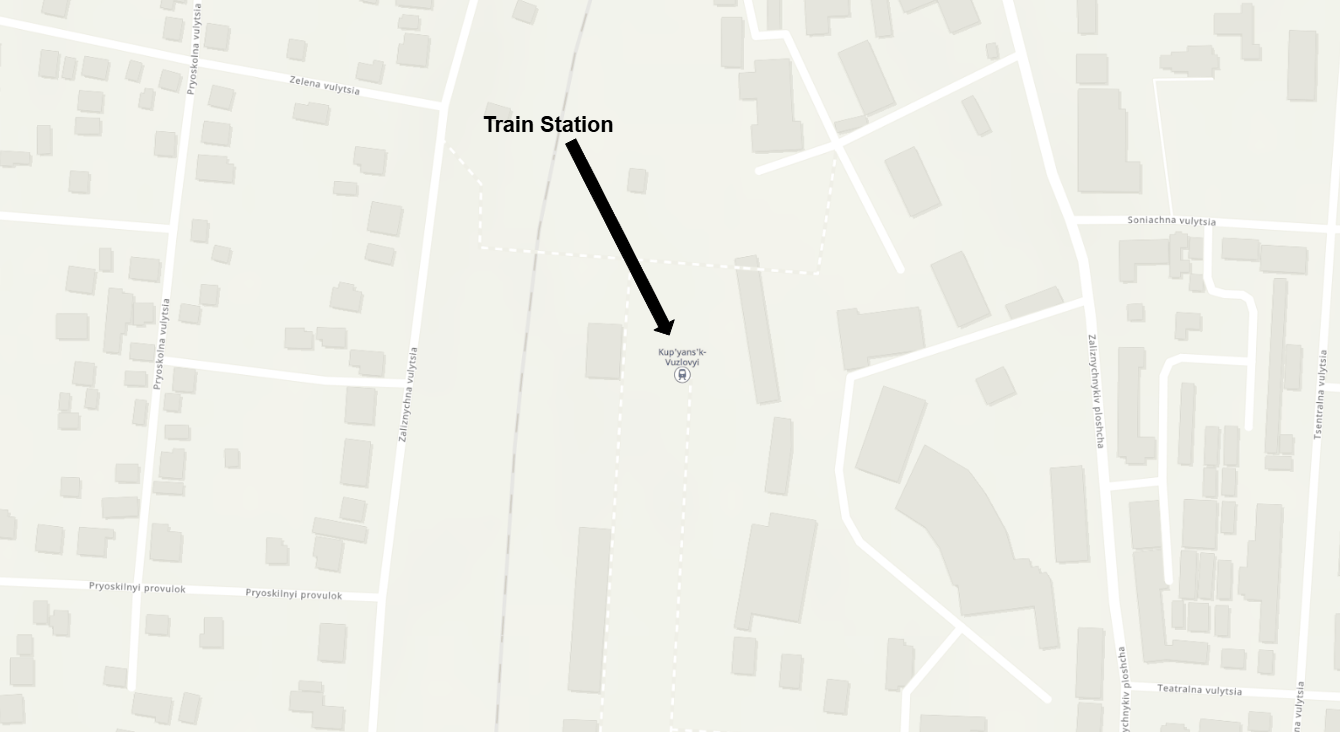
This market will resolve to “Yes” if, according to the ISW map, Russia captures the Kupyansjk-Vuzlovij railroad station located between Zaliznychna Vulytsia and Zaliznychnykiv Ploshcha (49.654359° N, 37.644326° E) by May 31, 2026, at 11:59 PM ET.
The railroad station will be considered captured if any part of the train station icon is shaded red on the ISW map (https://storymaps.arcgis.com/stories/36a7f6a6f5a9448496de641cf64bd375) by the resolution date. If the area is not shaded red by May 31, 2026, 11:59 PM ET, the market will resolve to “No”.
For any change on the ISW map to qualify for this market’s resolution, the relevant shading indicating Russian control must persist through the next full ISW daily update cycle. If ISW skips a day, shading must persist until the next finalized ISW update is published, regardless of the date. Any continuous shading which reflects either “Assessed Russian Control”, “Assessed Russian Advance In Ukraine”, or “Assessed Russian Gains in the Past 24 Hours” will qualify. “Assessed Russian Infiltration Areas in Ukraine” will not qualify.
If Russia comes into control of this territory as a result of a negotiated settlement, this will qualify for a 'Yes' resolution, regardless of whether it is shaded red in the ISW map. An announcement of a negotiated settlement that gives Russia de jure control will not qualify. Actual control must be established.
Once Russia captures the railroad station, any subsequent loss of control will not be considered towards the resolution of this market.
Train Station Location: https://polymarket-upload.s3.us-east-2.amazonaws.com/Kupiansk-Vuzlovyi+1.png
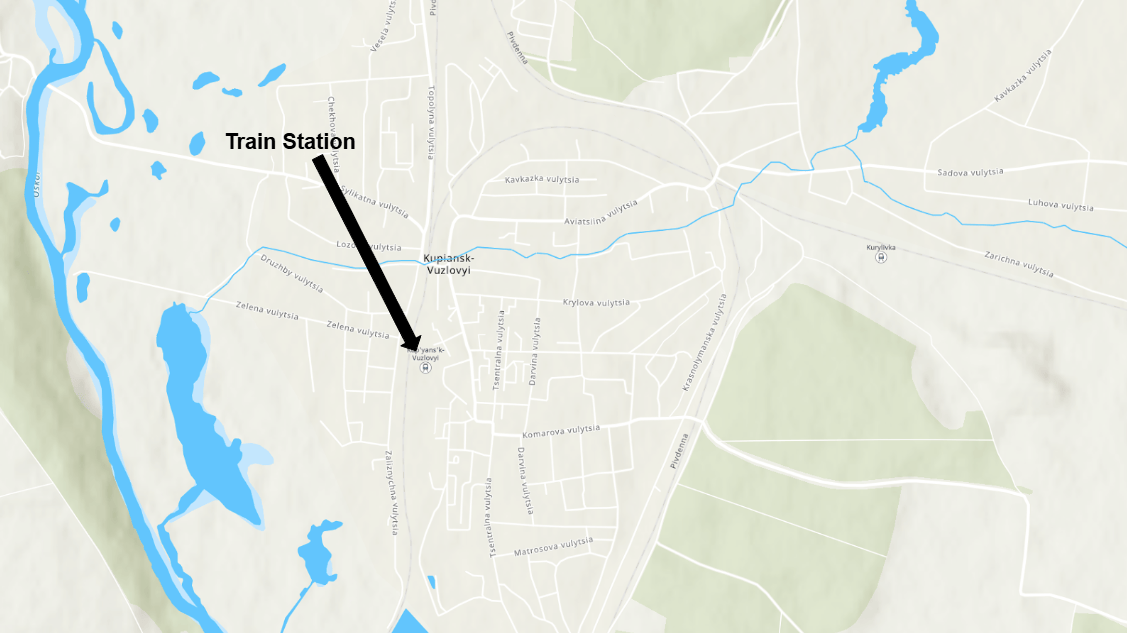
Train Station Location in Kupiansk-Vuzlovyi: https://polymarket-upload.s3.us-east-2.amazonaws.com/Kupiansk-Vuzlovyi+2.png
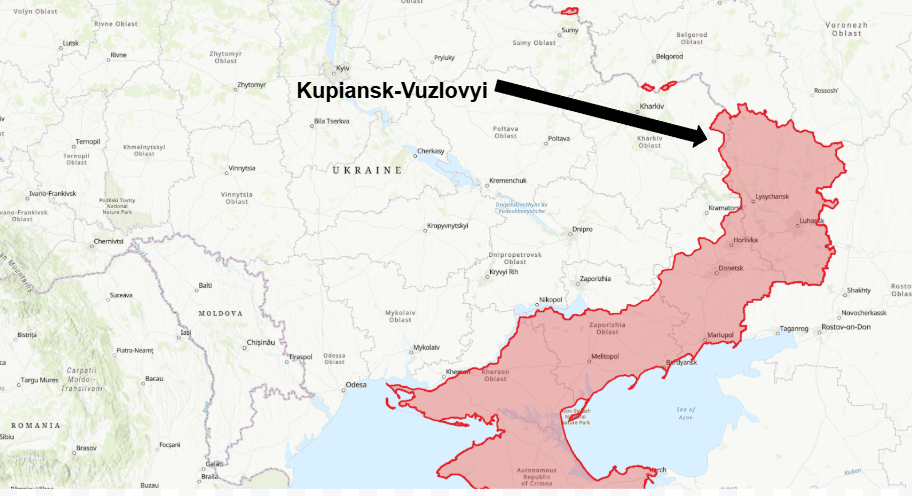
Kupiansk-Vuzlovyi Location: https://polymarket-upload.s3.us-east-2.amazonaws.com/Kupiansk-Vuzlovyi+3.png
Location on Google Maps: https://maps.app.goo.gl/2DWkLwtmD3dTUGbc8
The primary resolution source for this market will be the ISW Ukraine map. If the ISW map is rendered unavailable, information from DeepStateMap (https://deepstatemap.live/) may be used. If information from both the ISW and DeepStateMap are rendered permanently unavailable, a consensus of credible reporting may be used.
Note: Any temporary glitches or errors in the map will not be considered.
Market Interpretation
Prediction markets operate as continuously updating consensus systems where price is not prediction — it is compressed belief under liquidity pressure.
At any moment, pricing reflects aggregated trader positioning across:
Current pricing structure implies:
- YES trades near 2.9¢
- NO trades near 96.8¢
- Implied probability clusters around 2.9%
This is not static forecasting — it is a continuously reweighted probability surface that reacts to incoming information in real time.
Liquidity & Conviction Analysis
As of May 17, 2026 at 10:09 AM, liquidity concentration defines how sharply this market can absorb and reflect new information.
This market currently reflects a moderate-to-structured liquidity regime, where price discovery is active but still sensitive to directional order flow.
Key structural behaviors:
- tighter liquidity → faster repricing cycles
- fragmented liquidity → sharper volatility spikes
- concentrated flow → stronger directional conviction
- thin participation → narrative-driven swings dominate
In practice, liquidity is not just a metric — it is the stability coefficient of the probability surface.
Why This Signal Exists in Prediction Markets
Prediction markets function as real-time belief compression layers where distributed information becomes executable probability.
Each trade represents:
- updated information processing
- position hedging against future states
- narrative reinforcement or rejection
- asymmetric knowledge correction
Unlike polling or forecasting models, these systems continuously self-correct through financial exposure, making them sensitive to:
This produces a live probabilistic system that behaves closer to a market-driven intelligence engine than a static prediction tool.
Market Structure Transition
As of May 17, 2026 at 10:09 AM, prediction markets have evolved into persistent global probability infrastructure operating across geopolitics, elections, macroeconomics, AI systems, central bank policy, trade wars, financial markets, Trump–Xi summit negotiations, tariff diplomacy, sovereign risk, and real-world event forecasting.
Current structural characteristics:
- continuous pricing of world events
- high-frequency narrative absorption
- cross-market correlation formation
- liquidity-driven consensus formation
- rapid repricing of geopolitical risk
Platforms such as Polymarket and Kalshi now function as high-throughput probability engines, with cumulative sector trading volume exceeding $150B+ and sustained monthly flow consistently above $25B throughout major 2026 trading cycles.
By April 2026 alone, combined prediction market activity approached nearly $30B in monthly volume, with Kalshi processing approximately $14.8B and Polymarket generating roughly $10.2B in market activity during the same period.
Market structure has therefore shifted far beyond episodic retail speculation into continuous global liquidity formation, where geopolitical negotiations, tariff regimes, AI competition, elections, sovereign risk, macro narratives, and financial expectations are repriced in real time.
This transition has transformed prediction markets into always-on consensus infrastructure capable of absorbing information flows faster than traditional polling systems, legacy forecasting pipelines, institutional research desks, and many media narratives.
The modern prediction market stack increasingly behaves like a distributed probabilistic intelligence layer for global events rather than a niche speculative product category.
Market Metadata
- Market ID:
will-russia-capture-kupiansk-vuzlovyi-by-may-31 - Snapshot Timestamp: May 17, 2026 at 10:09 AM
- Category Class: Implied Probabilisty
- Signal Type: binary outcome probability surface
Trade This Market on Polymarket
Monitor live probability shifts, trader positioning, and real-time market consensus directly on Polymarket.
Explore More →